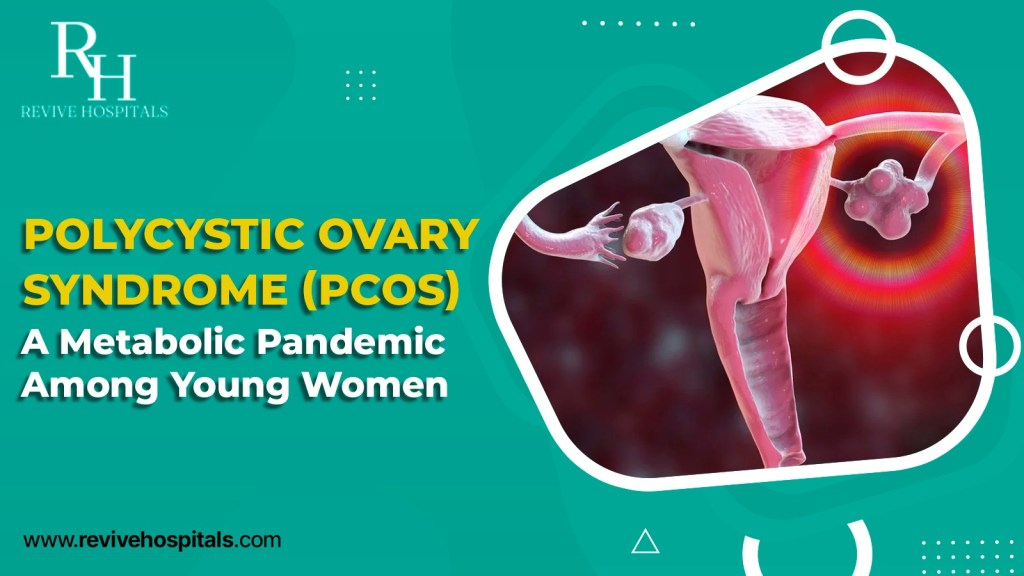
Polycystic Ovary Syndrome (PCOS): A Metabolic Pandemic Among Young Women
Polycystic Ovary Syndrome (PCOS), once considered a reproductive disorder, has now evolved into a metabolic syndrome pandemic among young girls and women of reproductive age. The root cause? A combination of poor lifestyle choices, unhealthy eating habits, and lack of physical activity—all of which contribute to insulin resistance, the driving force behind PCOS.
PCOS: Diabetes to the Ovaries
To help patients understand insulin resistance in PCOS, I often describe it as “Diabetes to the Ovaries.” Just like in diabetes, where the body struggles to utilize insulin effectively, PCOS results in elevated insulin levels, leading to hormonal imbalances that disrupt ovulation and cause a cascade of symptoms.
Diagnostic Criteria for PCOS
The Rotterdam Criteria (2003) is widely accepted for diagnosing PCOS. According to this, a woman must meet at least two out of the three following criteria:
- Irregular or Absent Ovulation (Oligo- or Anovulation)
- Irregular menstrual cycles (long cycles or skipped periods)
- Scanty menstruation or excessive bleeding
- Hyperandrogenism (Excess Male Hormones)
- Excessive hair growth (hirsutism) on the face, chin, upper lip, chest, or abdomen
- Hair thinning or male-pattern baldness
- Acne and oily skin
- Polycystic Ovaries on Ultrasound
- Ovaries appear enlarged with multiple small cysts (follicles)
- Ovarian volume >10 mL or >12 follicles per ovary
Importantly, other causes of hyperandrogenism and menstrual irregularities (such as thyroid disorders, hyperprolactinemia, and adrenal disorders) must be ruled out before confirming PCOS.
Why Is PCOS Becoming a Pandemic?
The prevalence of PCOS is skyrocketing due to modern-day sedentary lifestyles and poor dietary habits.
Key Contributing Factors:
- Insulin Resistance & Obesity: High sugar and processed food intake contribute to weight gain and insulin dysfunction.
- Lack of Exercise: A sedentary lifestyle worsens insulin resistance and hormonal imbalances.
- Unhealthy Eating Patterns: High-carb, high-fat, and low-protein diets lead to metabolic dysfunction.
- Stress & Sleep Deprivation: Cortisol imbalance further disrupts reproductive hormones.
Women with PCOS experience a wide range of symptoms, including:
- Irregular Menstrual Cycles – Skipped periods, delayed cycles, or heavy/prolonged bleeding
- Weight Gain & Difficulty Losing Weight – Particularly around the abdomen
- Excessive Hair Growth (Hirsutism) – On the face, upper lip, chin, chest, and back
- Hair Loss (Androgenic Alopecia) – Thinning of hair, bald patches
- Acne & Oily Skin – Due to high androgen levels
- Infertility & Difficulty Conceiving – Due to irregular ovulation
- Dark Skin Patches (Acanthosis Nigricans) – Common on the neck, underarms, and groin, indicating insulin resistance
Takeaway: Addressing PCOS as a Metabolic Disorder
PCOS is no longer just a reproductive disorder—it is a lifestyle-driven metabolic condition. Understanding insulin resistance as the root cause is crucial for effective management. Through dietary modifications, increased physical activity, and stress management, women with PCOS can significantly improve their symptoms and overall health.
In future blogs, I will discuss:
- How to manage PCOS naturally
- Diet and exercise strategies for PCOS
- Role of medications in PCOS treatment
Let’s take control of our health and break free from this metabolic pandemic!
The diagnosis of Polycystic Ovary Syndrome (PCOS) or Polycystic Ovarian Disease (PCOD) is based on a combination of clinical, biochemical, and radiological findings. The common investigations include:
1. Hormonal & Metabolic Blood Tests
- Fasting Blood Sugar (FBS): To assess insulin resistance and risk of diabetes.
- Fasting Serum Insulin (FSI): Levels above 5–10 µIU/mL may indicate insulin resistance.
- HOMA-IR (Homeostatic Model Assessment of Insulin Resistance): A value >2.5 suggests insulin resistance.
- Lipid Profile: To check for dyslipidemia (high triglycerides, low HDL).
- AMH (Anti-Müllerian Hormone): Often elevated (>6 ng/mL) in PCOS due to increased follicular count.
- Vitamin D Levels: Deficiency is commonly associated with PCOS.
2. Hormonal Imbalance Tests
- LH/FSH Ratio: Often >2:1 in PCOS (not always necessary for diagnosis).
- Total & Free Testosterone: Elevated levels suggest hyperandrogenism.
- DHEA-S (Dehydroepiandrosterone sulfate): Elevated in adrenal androgen excess.
- Prolactin: To rule out hyperprolactinemia.
- TSH (Thyroid-Stimulating Hormone): To rule out hypothyroidism, which can mimic PCOS symptoms.
3. Imaging
- Pelvic Ultrasound (Transvaginal or Transabdominal)
- Presence of ≥12 antral follicles (2–9 mm) in one or both ovaries OR
- Ovarian volume >10 cm³
- Classic “pearl-string appearance” due to multiple peripheral follicles.
Diagnosis Criteria
PCOS is diagnosed based on the Rotterdam Criteria (2003), which require at least two of the following three:
- Oligo/anovulation (Irregular or absent menstrual cycles).
- Clinical or biochemical hyperandrogenism (Acne, hirsutism, or elevated androgens).
- Polycystic ovaries on ultrasound (≥12 follicles or increased ovarian volume).
How to treat PCOS naturally
While most of the endocrinologists and gynes concentrate on giving a big list of hormonal pills for PCO treatment , which is only a eye wash , they donot work for curing the problem. I can proudly project myself as a PCO treatment expert .
Its my favourite part , as i have been working on this for many of my patients from past 15 yrs . Ofcourse it needs lot of patience and dedication while working on this .Pcos reversal takes time .Remember , You are investing on your health by making healthy choices for you .
I focus mainly on sustainable lifestyle choices by understanding and discussing on individual choices .
Seed cycling is the game changer
Adding physical activity daily is the key: by making 10k steps / household chores/ yoga / lowerbody workouts
While doing a reel i came across this pnemonic: on treatment for PCOS
P: add protein to your every meal :25-30 gms of protein in every meal
C: less carbs or No carbs
O: adding healthy oils / fats like ghee / coconut oil / olive oil . Will regulate your insulin resistance
S: Seed cycling is the game changer, Seed cycling ( using natural Omega3,6 fatty acids in a periodic way for a certain period will regulate your insulin resistance.
Check the blog on seed cycling .
S: also stands for stress management/ sleep regulation .
Polycystic Ovary Syndrome (PCOS): A Metabolic Pandemic Among Young Women