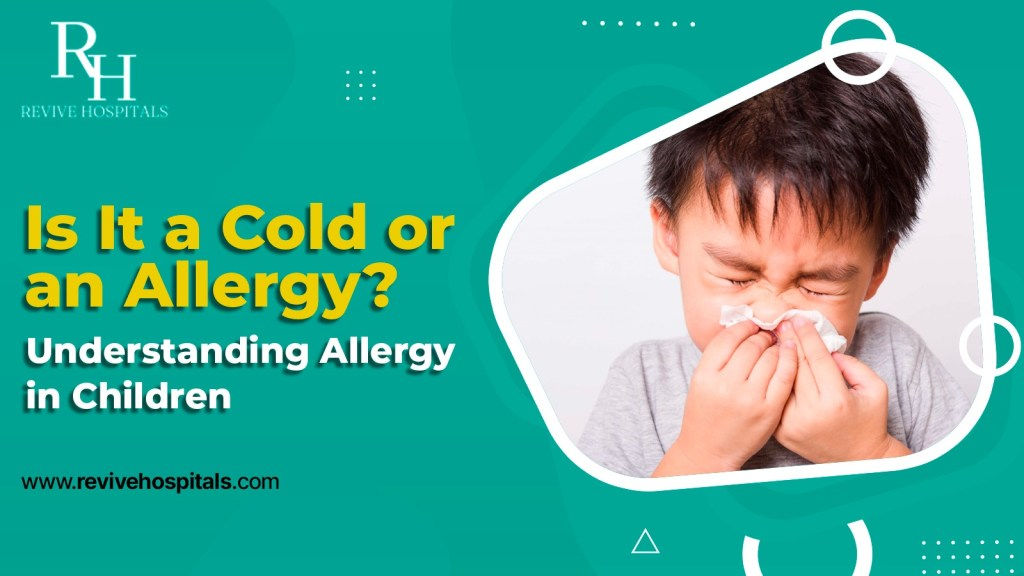
Is it Just a Cold, or Could it Be an Allergy?
Does your child often sneeze, cough, or scratch their skin? Do these problems keep coming back after weather changes, meals, or playtime? It might not be a regular cold. Many children now suffer from hidden allergies caused by dust, food, or pollution. It can affect their sleep, general health, and quality of life.
What Is an Allergy?
Sometimes, the immune system mistakenly mounts defense responses against normal harmless substances. These substances are called allergens. When the body reacts excessively to an allergen, it is called an allergy. The immune system treats the allergen as a threat and releases chemicals like histamine. This causes various symptoms, depending on the type of allergy.
Common allergy triggers are:
- Dust mites found in bedding and curtains
- Pollen from flowers or trees
- Pet dander
- Certain foods (like milk, eggs, and nuts)
- Insect stings
- Mold
- Air pollution
- Incense smoke
Warning Signs of Allergy
Allergy symptoms can vary based on their cause. They may be mild or severe.
Sneezing or a stuffy nose
- Itchy or watery eyes
- Throat itching
- Skin rashes or hives
- Coughing or wheezing
- Upset stomach or vomitting
These signs may look small at first, but they often point to a bigger problem. Particularly, when your child has difficulty breathing or swelling of the lips and throat, don’t wait to go to a doctor.
How Allergies Are Diagnosed
Guessing your child’s triggers is risky. What works for one child may not work for another. That’s why allergy tests are important. These are safe and painless tests to find out what’s really causing the symptoms.
- Skin prick test: Possible allergens are applied to the skin in smaller amounts to examine how it reacts.
- Blood test: It identifies antibodies IgE, which serve as triggers for allergies.
Elimination diet: Remove suspected foods one by one to check for reactions
Allergy Treatment Options
Treatments can reduce symptoms and improve quality of life. The doctor will often treat your kid with these therapies.
- Antihistamines (for mild symptoms)
- Nasal sprays (for allergies affecting the nose)
- Inhalers (for asthma-related allergies)
- Epinephrine auto-injector (for emergency allergic reactions)
- Allergy injections and oral medicines give more relief
Managing Allergies
After diagnosis, it is important to avoid triggers and be prepared. The following are some steps that will help to avoid triggers:
- Keep your home clean and dust-free
- Use allergy-proof covers on mattresses and pillows
- Avoid foods that cause reactions
- Share your child’s health condition with teachers and the nurse
Manage Allergies with Professional Help
Allergies can make daily life hard for children and parents. Dr. Srihari Alapati, General Paediatrics at Revive Hospitals, helps kids manage allergies with care and clarity. He has worked as a paediatrician for 23 years. He explains the process simply so that you can manage your kid’s allergies and help them feel relief.