Managing Insulin Resistance: Diet andLifestyle Changes for Women Under 40
Understanding Insulin Resistance in Women Under 40
So, what exactly is insulin resistance? Insulin resistance is when your body’s cells basically start ignoring the signal from insulin.
Think of insulin as the key that opens the door for sugar (glucose) to get out of your bloodstream and into your cells for energy. When you become resistant, the keys stop working well.
-
Your blood sugar stays high because the cells aren’t taking it in.
-
To compensate, your body tries to fix the problem by churning out huge amounts of extra insulin.
-
Unfortunately, having too much insulin in your system for a long time can eventually lead to other health issues.
The rise in insulin resistance among women under 40 really isn’t shocking when you look at today’s lifestyle. Basically, our busy, high-stress lives are putting a huge burden on our bodies:
-
Non-Stop Stress: Juggling work, family, and everything else means long hours and constant pressure, which messes with our hormones.
-
Irregular Habits: Lack of sleep and inconsistent eating habits throw our body’s internal balance out of whack.
When you put it all together, these factors—combined with normal hormonal changes women experience—make it much harder for the body to keep things running smoothly, leading to the cells resisting insulin.
If insulin resistance isn’t managed early, it can lead to weight gain, PCOS, type 2 diabetes, and even heart problems later in life. The good thing is, if we catch it early and make small steady changes, it’s completely manageable.
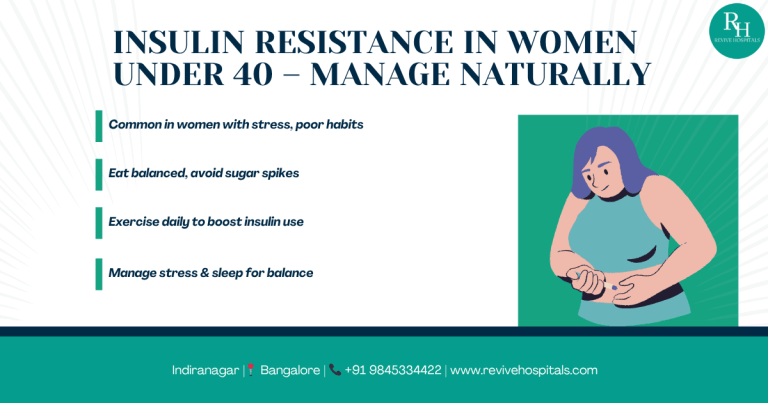
Common Signs and Symptoms
The problem with insulin resistance is that it doesn’t give you a clear warning sign it sneaks up on you. You might just feel tired all the time, even when you get enough rest. Other subtle hints include being constantly hungry for sweets or carbs and feeling mentally foggy, making it hard to concentrate. Many women also notice weight gain around the tummy that just doesn’t go away easily.
Some also experience irregular periods which can be another sign that hormones are getting affected. And if you’ve noticed dark patches on your neck or armpits, called acanthosis nigricans, or small skin tags, that’s your body giving a gentle warning sign that insulin might be off balance.
Recognizing these early symptoms really helps because once you know what’s going on, you can stop it from progressing to diabetes. So don’t ignore what your body’s trying to tell you, it’s always speaking, we just have to listen.
Diet Strategies to Manage Insulin Resistance
Let’s talk food, because honestly, what you eat every day makes the biggest difference here. When you’re looking for a diet to combat insulin resistance, keep it simple, whole, and balanced. The main goal is to stop your blood sugar from spiking constantly.
Here’s how to do it:
-
Choose “Slow-Burn” Carbs: Focus on low-glycemic foods that release sugar slowly. This includes whole grains like oats, brown rice, quinoa; non-starchy vegetables like spinach and broccoli; and legumes lentils and chickpeas.
-
Balance Your Plate: Make sure every meal has a good mix of protein, healthy fats, and fibre. This mix keeps your sugar levels stable and helps you feel fuller for longer.
-
Cut the Spikes: You already know the culprits- sugary drinks, white bread, pastries, and junk food. These dramatically spike your sugar and force your already struggling insulin to work even harder.
Change Your Eating Habits:
-
Try eating smaller, more frequent meals
-
Drink plenty of water.
-
Eat mindfully.
You don’t need a complicated plan, just real food:
-
Breakfast: Have something like oatmeal with chia seeds and berries.
-
Snack: choose healthy snacks like almonds.
-
Lunch: Brown rice or quinoa chicken and veggies.
-
Snack: yogurt or a piece of fruit.
-
Dinner: Have soup with a fresh salad.
You don’t have to become a gym addict overnight, but combining cardio like brisk walking, cycling, or dancing with strength training really helps your body use insulin better. Even 30 minutes a day can make a huge difference if you’re consistent.
Then comes sleep, and we underestimate it so much. Lack of sleep messes with your hormones, increases stress levels, and worsens insulin resistance. Try getting at least 7 hours of quality sleep every night, your body will thank you.
And speaking of stress, it’s a silent trigger. When you’re stressed, your body releases cortisol which messes up insulin levels. So make time for things that calm you, yoga, meditation, journaling, or even just quiet walks.
Also, try not to sit for too long. If you work at a desk, stand up every hour, stretch, or take a short walk. Small movements throughout the day keep your metabolism active.
These aren’t quick fixes, they’re slow steady lifestyle shifts that make insulin resistance easier to manage long term.
Role of Weight Management
Let’s be real: having extra weight, particularly around your stomach, really messes up how your body responds to insulin. That said, there’s great news: you don’t need a massive change. Losing just a small amount of weight, even 5% to 10% of your current body weight can boost your insulin sensitivity. To start, simply focus on eating smaller portions, slowing down at mealtimes, and moving your body every day. Be patient and gentle with yourself; consistency beats extreme dieting. Overtime, these little habits really add up.
The goal isn’t just to lose weight, it’s to feel better, move better, and give your body less resistance to insulin.
Monitoring and Medical Support
While changing your lifestyle is powerful, you still need to keep an eye on your numbers. Regular check-ups help you see exactly what’s working. Your doctor might suggest tests like fasting insulin, HbA1c, or glucose tolerance tests to check on your body’s sugar processing.
If you are dealing with symptoms like irregular periods or PCOS, it’s smart to see a specialist. A doctor like Dr. Snehalatha, OB/GYN at Revive Hospitals, can help you get a complete picture of your hormonal and metabolic health. You can also see a nutritionist or endocrinologist for a personalized plan. Regular monitoring is also a best way to catch problems early and prevent complications later on.
Tips for Long-Term Success
Managing insulin resistance is not about being perfect it’s mostly about being consistent.
Stick to balanced meals, move your body daily, manage stress, and get good sleep.
Forget about crash diets or quick fixes—they simply don’t last.
Instead of only tracking weight, pay attention to how you feel. Are you more energetic? Sleeping better? Feeling lighter? Every small change you notice is a win, because those little improvements truly add up. At the end of the day, the goal is to build a lifestyle that supports you, not one that exhausts you.